(202) 549-2374

D.C.’s new criminal record sealing and expungement statute
Scheduled to take effect in January 2026, D.C.’s new criminal record sealing and expungement statute should make it much easier for people to move on from a criminal past.

Scheduled to take effect in January 2026, D.C.’s new criminal record sealing and expungement statute should make it much easier for people to move on from a criminal past.

When is a person seized for Fourth Amendment purposes? When is a piece of property abandoned such that there is no longer reasonable expectation of privacy?

According to the 6th Amendment, the lawyer who accepts representation in a criminal case must affirmatively assist with the defense, thereby advancing it.
We got spoiled during the pandemic with favorable plea offers. The government was trying to resolve as many cases as possible. Those times are over.
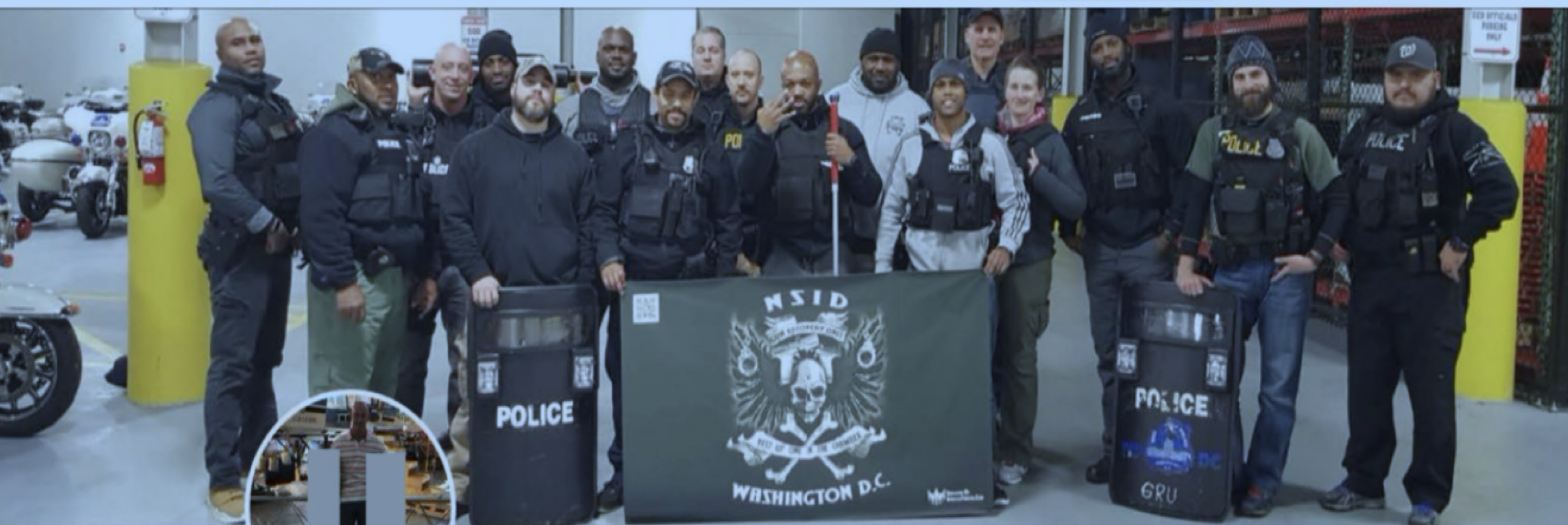
All over the District, young black men are lifting their shirts to show their waists as the unmarked cars cruise past. This is because of the “jump out” cops.
Even if officers had legal basis for searching the car based on the fact that POCA is an arrestable offense, they still did not have authority to search box.

Rule 11 of the D.C. Rules of Criminal Procedure provides for a plea agreement in which both sides agree on the sentence that will be imposed.

According to the “Rule of Lenity,” a court should construe any ambiguity in the language of a criminal statute in favor of the defendant.

Property seized by police during an arrest is often subject to civil forfeiture proceedings whether or not the person is ever convicted of a crime.

Parties who prevail in a CPO hearing can file a motion asking the court to assess legal fees against the other party. Respondents must prove “bad faith.”

Everything you need to know (webpages, emails and phone numbers) to navigate your way around D.C. Superior Court’s Criminal Division during the pandemic.
It is reversible error for the trial judge to prohibit the defendant from testifying that he was acting in self-defense when the court had already concluded that the arresting officer had not used excessive force.

Although a person can always revoke consent to a warrantless search, such a withdrawal of permission must be clearly and unequivocally communicated. So held the D.C. Court of Appeals in Ford v. United States.

Because the grandmother is deaf, she does not hear the police officers assembling on the front porch of her rowhouse.

In the limited circumstances in which this is necessary, DC Code §16-806 provides for the unsealing of a criminal record that has previously been expunged/sealed.

In a cynical attempt to elicit the court’s sympathy, the government blames Covid-19 for its delays in responding to motions to seal criminal records. Bureaucratic incompetence is the true culprit.

Use of the phrase “expungement of a criminal record” suggests that the record in question is truly erased/obliterated such that it no longer exists. Whether this actually happens – both practically-speaking and from a legal standpoint – is a bit more complicated.

Because of the Covid-19 pandemic, the time between March 18 and November 9, 2020 will be “tolled.” In other words, it will not count when calculating whether a defendant’s speedy trial rights have been violated.

Offenses that have been decriminalized (for example, the possession of a small amount of marijuana) present one of the most promising options for sealing or expunging a criminal record in Washington, D.C.
With almost 100 people making their way through arraignment court every day, it is inevitable that there will be a melt-down or two. After all, we are dealing with people who are finishing what for many of them will be the worst day of their lives.

The fastest and most effective way to remove an arrest from your criminal record is to file a motion alleging actual innocence under D.C. Code §16-802.

According to a plain reading of D.C.’s new resisting arrest statute, you can lawfully resist your own Terry stop.

In most cases, the FBI will – as a courtesy – comply with a state court’s order to remove a criminal record from the National Crime Information Center (NCIC).

A criminal record for simple assault in D.C. can be sealed either immediately on the grounds of actual innocence or after two years in the interests of justice. A conviction for simple assault can be sealed after eight years. Expunging/sealing an arrest for simple assault There are two different ways to expunge/seal an arrest for simple assault. The first way is …

Everyone who has been arrested for a criminal offense in Washington, D.C. has some type of criminal record. This would include being arrested for prostitution/sexual solicitation.

The process after filing normally takes four to six months after filing in D.C. This includes a 60-day period for the government to respond.

The first option for sealing a felony arrest in D.C. would be to file a motion immediately on the grounds of actual innocence under D.C. Code § 16-802. The second option would be to wait two years to file it under D.C. Code § 16-803.

The court will typically order all relevant prosecuting offices, law enforcement agencies, and pretrial, corrections or community supervision agencies to remove all publicly available records that the person was arrested, charged and/or convicted in the case.

“Expungement” of a criminal record suggests that it is destroyed, thereby restoring the person to the position he/she occupied before the arrest. “Sealed” records still exist. They are just hidden from public view.

When are police required to read you your rights? The answer actually is never. That is, not unless the suspect is in custody and is being subjected to interrogation (hence the term “custodial interrogation”) and only then if police want to use the statements against him in court.
I am watching a guilty plea from the gallery. The prosecutor reads out the alleged facts from the police report, and the defendant says, yes, that is what happened. The colloquy continues. The defendant then tells the judge that she is not actually guilty. The only reason she is taking the government’s deal is because her lawyer made her. And, …
The complainant is having a melt-down in the hallway. It is not my case so I have no idea what is going on. All I see are two young prosecutors trying to calm her down. The more they talk, the angrier she gets. The situation seems to be getting out of control when a U.S. Marshall arrives. He is an …
You should not feel bad. Believe me, you are not the first person to be fooled by police into making a statement or doing something else incriminating. Remember: They are professionals. They are good at what they do. And you are not a professional criminal. Lots of educated, savvy and sophisticated people have fallen for the exact same trick. Some …
One of the questions I often get in connection with the sealing of a criminal record in D.C. is this: What must the person disclose about his or her record after that record has been successfully sealed? The lawyerly answer to that question, of course, is that it depends. If the record was sealed on the grounds of actual innocence, …
During the defendant’s opening statement at trial, Denardo Hopkins’ lawyer got up in front of the jury and conceded that this client was guilty of felony drug dealing charges. The issue the D.C. Court of Appeals faced in Hopkins v. United States, 84 A.3d 62 (D.C. 2014), was this: Did this admission constitute a guilty plea such that the judge …
Whenever a group of defendants are lined up before the court to do misdemeanor guilty pleas, one or two will often try to back out at the last minute. If the defendant is quibbling with something the prosecutor has just read from the police report, the parties can usually find common ground on facts that still make out every element …

It happens perhaps most often in domestic violence cases that the complainant fails to show up on the morning of trial. The government would have you believe this is because the complainant fears for his/her safety, and this might sometimes be true. More often, it is because the complainant has reconsidered having the lover, spouse, or family member locked up …

The U.S. Supreme Court has made such a mess of the Confrontation Clause line of cases that the D.C. Court of Appeals declared today that it really doesn’t know what to do. So it decided to do the right thing instead. In Robert Young v. United States, 63 A.3d 1033 (D.C. 2013), the D.C. Court of Appeals decided to essentially …
The D.C. Court of Appeals took another step last week in defining what up until recently has been a poorly defined term: the “significant bodily injury” that is required in order for the government to prove felony assault. Although the appellant in Fidel Quintanilla v. United States, 62 A.3d 1261 (D.C. 2013), was convicted of multiple felony offenses, including robbery, …

When people talk about evidence being admitted at trial, they tend to think in terms of physical evidence: guns, drugs, documents, fingerprints, DNA, that type of thing. Sometimes you need to remind them that oral testimony alone – someone getting up on the stand and testifying to what he or she saw – can also serve as the basis for …
Sometimes you need to go outside your own jurisdiction to find the right language in support of an argument. For years I have been looking for language that captures the problems — the ambiguity and the over-inclusiveness – posed by use of the police officer’s favorite catch-all phrase, “furtive gestures.” Today I found what is probably the best language I …
That a controlled substance can be possessed constructively as well as actually is a court-made decision. As Judge Ruiz put it in her concurring opinion to Rivas v. United States, 783 A.2d 125 (D.C. 2005), the “doctrine of constructive possession is a judicially developed theory of liability designed to be a ‘proxy’ for actual possession.” The government needs to prove …

Although you might think that invoking your right to remain silent and invoking your right to a lawyer would have the same legal effect, you would be mistaken. In fact, if ever forced to choose, you should always ask for a lawyer. Police can resume interrogation after a period of time when you invoke your right to remain silent. But …
Courts seem to be bending over backwards to avoid basing decisions on Arizona v. Gant. In an opinion issued last month by the D.C. Court of Appeals, for example, the defendant was pulled over for a minor traffic offense. The defendant was ordered out of the van and frisked, with the officer finding no weapons. The officer then handcuffed the defendant …
Without more specifics, the defendant’s movements were insufficient to arouse a reasonable fear in the officer that Mr. Jackson was presently dangerous.

One of the problems with bad law is that it leads to even worse law. I have never been a big fan of the U.S. Supreme Court’s decision in Illinois v. Wardlow, which held that being in a “high crime” area (what part of any U.S. city does not have a lot of crime?) and running away at the sight …
If constructive possession is a legal fiction, then joint constructive possession is a double legal fiction. It is not only that you do not actually possess the article in question (and by actual possession, I mean physical occupancy or control over the property). It is that other people – it could be one person, it could be four other people …
I put our star witness in jail. I have heard about prosecutors being slammed for doing this. One of my adjunct professors in law school – a prosecutor in Philadelphia – ended up on someone’s list of the top ten worst prosecutors in the country for having one of her witnesses in a murder case sit in custody for …
The Jencks Act was a nasty little surprise when I began to practice in D.C. It was not that I didn’t appreciate getting the information. It was that I was used to getting this information much earlier in the process in Pennsylvania. The Jencks Act, 18 U.S.C § 3500, requires the prosecution to turn over to the defense any “statement” of a witness …

On the morning of trial, the prosecutor finds out that the testimony provided by a police officer at the preliminary hearing was inaccurate. Although the prosecutor himself is not planning to call this particular police officer to testify at trial, he knows that the defense attorney is. So what does prosecutor do? Does he immediately contact the defense attorney to …
A constitutional right without any way of enforcing that constitutional right is hardly any right at all. That’s a pretty accurate description of the government’s obligations under the Due Process Clause of the U.S. Constitution and Brady v. Maryland to turn over exculpatory information to the defense. Relying almost entirely on the goodwill and integrity of the individual prosecutor assigned …
In Arizona v. Gant, the U.S. Supreme Court helped slow a continuing trend in the chipping away of Fourth Amendment protections. For years, most jurisdictions allowed police officers to search any car whose occupants had been arrested, even when the traditional justifications for the warrantless car search –officer safety and preservation of evidence – were absent. Typical of the resulting practice …

The problem with using a canon of statutory interpretation to justify a legal opinion is that you can usually find some other canon to arrive at the exact opposite conclusion. For example, to support its recent holding in In Re D.M., 47 A.3d 539 (D.C. 2012), the D.C. Court of Appeals used the rule that, whenever possible, different provisions within a …

The prosecutor can hardly blame me for being skeptical. I ask her about one of the counts that was dropped from the complaint, and she tells me it was because the complaining witness said a few things to her that didn’t add up. “That’s Brady, then,” I tell her. I feel a little badly because she is young and I …
The defendant is charged with armed robbery. He and the government reach agreement on a plea deal in which the government agrees to ask for no more than 10 years of incarceration. In a memorandum submitted to the judge before sentencing, the government then violates that agreement by asking the judge to impose 20 years. It is the judge, not …

Jejomar Untalan has been busy. I reported last week on his successful appeal in In re S.B. This week the D.C. Court of Appeals issued yet another decision bearing Untalan’s name as the appellant’s attorney: In re W.R., 52 A.3d 820 (D.C. 2012). This time, however, Untalan was unsuccessful. W.R. was approached during the school day by a police officer …
California v. Hodari D, 499 U.S. 621 (1991), is a lousy opinion. It used to be that a person was seized for Fourth Amendment purposes the moment his or her liberty was “restrained” by “some physical force or show of authority” by a police officer. This was the standard established by Terry v. Ohio, the U.S. Supreme Court case that lays …
“[I]t is a matter of common knowledge that men who are entirely innocent do sometimes fly from the scene of a crime through fear of being apprehended as the guilty parties, or from an unwillingness to appear as witnesses. Nor is it true as an accepted axiom of criminal law that ‘the wicked flee when no man pursueth, but the …

My client was walking along one night in Philadelphia when he was jumped by three men who took his money and firearm. When he went to the police to report the robbery, the police ran his record. They then arrested him for being a felon in possession of a firearm. In other words, he went into the police station as …
It is a challenge for every criminal defense attorney. You want to do everything you can to put the government’s case to the test. At the same time, recognizing that you still might not win, you don’t want to antagonize the judge such that the judge decides to penalize your client at sentencing. Because, after all, you need to take …
Many police officers have a tendency to editorialize on the witness stand. It is not that the driver reached for the glove compartment after being pulled over so that he could have his license and registration ready for the officer’s inspection. It is that the “suspect” was making “furtive movements” upon the officer’s approach. It is not that the police …
The disciplined judicial mind should not be subjected to any unnecessary strain;…the most austere intellect has a subconscious. How great is this language? Although the language dates back to 1972, it did not come to my attention until it was quoted in a opinion issued this month by the D.C. Court of Appeals, Plummer v. United States, ___A.3d ___, ___ …
The prosecutor has acknowledged that he should have turned over certain information to defense attorneys. That is what he says today. The case was back in 1984. Witnesses came forward when he was still preparing the case to say that there were two other men in the alley that night who were never charged. One of these men, identified by …
One of the things I miss most about working at the public defender’s office was the ability to get immediate feedback from colleagues on an issue. Do you know this judge or prosecutor? Have you faced this type of situation before and, if so, how did you handle it? And so on. A major drawback to this ability, however, is …
One of the things that surprised me when I first began to practice criminal law was the notion that you could be acquitted of a particular offense at trial and then have that very same criminal charge – the one on which you were just found not guilty – serve as the basis for being found in violation of probation …
David Simms was charged with possession of marijuana. On the day of his scheduled trial, the government announced that it was ready to proceed on the charge. Defense counsel stated it was still awaiting discovery on a few matters and, after passing the matter a couple of times, the court eventually postponed the trial so that the discovery issues could …

When faced with a really bad case, one option is to work out a favorable plea agreement with the government to try to mitigate consequences for the client. Another frequently overlooked option is to do an open guilty plea. In fact, the Criminal Practice Manual put out by the D.C. Public Defender Service devotes an entire chapter to guilty pleas …

Your client is heading home, minding his own business, when he comes across what appears to be a homeless man sleeping on a bench at the metro station. Sticking out of the man’s coat pocket is a shiny new I-Phone. In a moment of weakness, your client grabs the I-Phone and is immediately taken to the ground by both the …
How can you not love the criminal defenses? With the government burdened with proving every element of an offense beyond a reasonable doubt, one criminal defense strategy is to challenge the identity of the perpetrator. Yes, says the defense lawyer in an alibi defense. I am sure the crime was committed, and wasn’t it a particularly egregious one at …
It is never easy to plead guilty. As the cliché goes, if you plead guilty, there is a 100% chance that you will be found guilty. Nobody likes to stand up in open court and admit to a list of terrible actions recited by the prosecutor. And the greatest expressions of regret I hear from defendants are often based …
Although the ability to cross-examine a witness is a critical component of the Sixth Amendment right to confront your accusers in a criminal case, this right is not without boundaries: “Once sufficient cross-examination has occurred to satisfy the Sixth Amendment, . . . the trial judge may curtail cross-examination because of concerns of harassment, prejudice, confusion of the issues, …

Reviewing the transcript from a hearing or trial you have done can sometimes be a humbling experience. What you may have remembered as a dramatic moment at trial can come across as flat on the printed page, and a good stenographer will throw in every “er,” “um” and “okay” to remind you that you may not be quite the …
I have been called to testify in a criminal case. A couple of weeks ago I represented a woman seeking a civil protection order against a former boyfriend. With the boyfriend now facing criminal charges for contempt of court, certain admissions he made to me during the course of that representation have become relevant to the criminal proceedings. It …
Michael Bruckheim was scheduled to cross-examine Lucas Zarwell, the chief forensic toxicologist in D.C., and a group of DUI lawyers had gathered outside Room 116 yesterday afternoon shortly before 2:00 pm. Zarwell testified before city council last May that urine samples taken by police to test suspected drunk drivers are not reliable enough to accurately measure a person’s blood …
A couple of years ago, a Court of Common Pleas judge in Philadelphia banned me from her courtroom for life. Both the stenographer and her law clerk looked at me with sympathy when the judge issued the edict. Maybe they thought I would be upset. In fact, running a list in this judge’s courtroom was viewed to be a …
After finding my client guilty of simple assault, the judge orders my client to write a letter of apology to the complaining witness. I can understand an apology after a guilty plea. After all, acknowledgment of remorse could be an important part of the rehabilitation process. What I don’t understand is the need for an apology after the defendant …
MR. KOEHLER: Objection. Relevance. THE COURT: Mr. Koehler, you can sit down. MR. KOEHLER: Your honor, this is absolutely ridiculous. MR. RIORDAN: No, it’s not. THE WITNESS: No, it’s not. MR. KOEHLER: It is completely irrelevant. THE WITNESS: What’s ridiculous is how [the petitioner] gets away with all this stuff. THE COURT: I really can’t properly judge the relevance …

If you plead guilty, there is a 100% chance that you will be found guilty. Or something like that. I read that on the Internet a few weeks ago and, while I can’t remember who said it for attribution, I had the opportunity to use this clever little phrase just the other day. It is what you tell a …
I have often said that you can explain everything in life through a Seinfeld episode. And while there is no single case that does for criminal law what Seinfeld does for life, Terry v. Ohio comes pretty darn close. It is not that Terry is my favorite case. After all, it expanded the scope of constitutionally permitted searches. But, …
Police officers love the “plain view” exception to the Fourth Amendment requirement for a warrant. It is because this exception is so straightforward and understandable: I didn’t need a warrant because I saw it with my own eyes. I immediately recognized it as contraband. So I grabbed it. All the other exceptions are much more complicated, and the law …
Wayne, my investigator, thinks he is being subtle. He insists on escorting me out of a bad neighborhood whenever we finish a crime scene investigation, and he doesn’t realize I can see him lingering down the street as I climb into my car. But this guy is bigger than his childhood hero, Jack Lambert of the Pittsburgh Steelers, and …
I am dealing with a “hide-the-ball”-type prosecutor in Virginia. I have gotten spoiled from working with D.C. prosecutors; they are usually pretty upfront about what they have against your client. There are no ambushes or surprises. Your client has better information in deciding whether to plea. Everyone is better off for it. This is not that kind of prosecutor. …
There are only a small number of criminal cases that all lawyers, even those who don’t practice criminal law, seem to know. Although Miranda v. Arizona is probably the most famous, there is also Gideon v. Wainwright (right to counsel), Wong Sun v. United States (suppression of illegally obtained evidence), Crawford v. Washington (right to confrontation), and In Re Winship …

Many laypersons suffer from misconceptions about the protections offered by the Double Jeopardy Clause contained in the 5th Amendment to the Constitution. As Blonde Justice pointed out in one of her funnier posts, for example, double jeopardy does not cover the situation in which the defendant is forced to show up twice for court appearances on the same charge. Nor does …
Earlier this week, I caught the tail-end of a DWI trial in which Michael Bruckheim was representing the defendant. Bruckheim had attended portions of my last DWI trial in D.C., and I decided to repay the favor. I wanted to see him cross examine the same police officer who had testified in my case. And, recognizing that everyone has a …
In Quarles v. Commonwealth, a recently issued opinion by the Virginia Court of Appeals, the court considered a set of facts similar to the U.S. Supreme Court case of Rhode Island v. Innis. However, finding a number of ways to distinguish this case from Innis, it concluded that the defendant’s confession should have been suppressed as the product of police …
Over at Chicago Criminal Defense, Marcus Schantz writes about the challenge of representing an incarcerated client who fancies himself a lawyer. With much at stake, time on his hands, and access to a prison “library” (often a converted broom closet with a few outdated law books), a client might spend hours poring over law books, drafting motions, and developing strategies for …
Having a client accept a guilty plea is like getting all dressed up for the prom and then deciding to stay home. On Friday I stood with the prosecutor outside a Prince William County courtroom on a driving while intoxicated (DWI) case. I had my trial notebook in one hand bursting with photographs of the scene and breath test records …
Here, for free, is my simple legal advice: Whatever you do, don’t get arrested in Virginia. The Commonwealth is, as far as I can tell, one of the worst places to find yourself when facing criminal charges. The laws are tough, and judges, prosecutors and juries are typically unforgiving. Offenses that would be considered akin to a traffic infraction …
Of all the tricks used by police officers, one of the most devious – yet harmless – tricks I have heard is the ploy they use to take a DWI suspect into custody after deciding to make the arrest. The purpose of this particular trick is not to improve detection techniques or to get a reluctant suspect to confess. It …
For the most part, the Assistant U.S. Attorneys here in D.C. seem to have things right. For one thing, they return your phone calls, usually on the same day, and I have to give them credit for that. For another, they don’t seem to sweat the small stuff. They seem to understand that many people are arrested for no reason …
For over 20 years, Detective Wynn conducted line-ups at the Curran-Fromhold Correctional Facility (CFCF) in Philadelphia. The line-ups were carried out in a little triangular-shaped room just beyond the main reception area. You know the way it looks from T.V.: the ante-room, the glass, and then, on the wall behind where the suspects stand, the red lines demarcating height. The …
It is a sad but well-known fact among criminal defense lawyers in many jurisdictions that if you insist on a jury trial and lose, you will get a stiffer penalty than if you lose the same case in front of a judge. That’s right: Same facts. Same verdict. Different sentence. This is a variation of the so-called “trial tax,” which …