(202) 549-2374
Limiting re-cross examination in Sanchez v. U.S.
Criminal defendants have a constitutional right to confront their accusers. In D.C., however, this right does not necessarily extend to recross examination.

Criminal defendants have a constitutional right to confront their accusers. In D.C., however, this right does not necessarily extend to recross examination.
Under the ‘forfeiture-by-wrongdoing doctrine, a defendant forfeits his Sixth Amendment right to be confronted by a witness against him, as well as his objection to the introduction of hearsay, if he wrongfully procured the unavailability of that witness with the purpose of preventing the witness from testifying.
Bias can be “a favorable or friendly feeling toward a party.” It can also be hostility toward someone, a motive to lie out of self-interest, and/or corruption.
Now that DFS has lost its accreditation, the government is looking for creative ways to prosecute drug possession cases, including amending the charges to attempted possession. There are equally creative ways to counter this strategy.

Donald Trump’s problems go beyond a lack of manners or character. He is also a sociopath. He does not learn. He has no shame. He is driven only by immediate self-interest.
Like “reading the white space” on a police report (that is, focusing on what is NOT included), the “missing evidence” jury instruction “essentially creates evidence from non-evidence.”
It can’t be much fun to watch a legal drama on TV with my wife and me. We understand the need to keep the story moving. But you need to get certain basics correct.

When it comes to hearsay, there is only one phrase you need to keep in mind: Hearsay is an out-of-court assertion offered for the truth. If it doesn’t satisfy that definition, it is not hearsay.
In addition to contemporaneity and spontaneity, the proponent of a “present sense impression” hearsay exception must prove that the declarant personally perceived the event described.
If the government introduces new evidence during re-direct examination, the defense has a constitutional right to question the witness about that new evidence.
“What is your name?” That is a non-leading question. Compare that with “Your name is John Smith, isn’t it?” That would be leading. It basically tells the witness what his answer should be.
Yes. If a witness testifying at trial made a prior statement that a party would like to introduce and that statement was intended as an assertion and is now being offered as substantive evidence to prove the truth of the matter, then the statement would still be hearsay. It is immaterial whether or not the witness is present in court to be cross-examined with respect to the earlier statement.
Whether or not an out-of-court statement is hearsay depends on the purpose for which it is offered. If it is offered to prove the truth of the matter, it is hearsay. If offered only to impeach (i.e., discredit) a witness, then it is by definition not hearsay.
A deposition is a witness’s out-of-court testimony that is reduced to writing (usually by a court reporter) for discovery purposes or for later use in court. As such, it would appear to be quintessential hearsay (i.e., an out-of-court declaration that is asserted for the truth of the matter) and would only be admissible if (1) it were offered for a non-hearsay purpose or (2) it satisfied the “prior recorded testimony” or some other exception to the hearsay rule.
Whether a receipt constitutes hearsay would depend on the purpose for which it is being offered. If it is being used to prove the value of an item, it would be hearsay.
There might circumstances in which a person’s silence could be interpreted to communicate something. For example, silence in response to the traditional challenge “speak now or forever hold your peace” during a wedding ceremony could be interpreted to communicate assent. If offered to prove that the “declarant” endorsed the union, it could constitute hearsay, thereby requiring the proponent of the evidence to introduce it through an exception to the hearsay rule.
Conceivably, yes. Hearsay is as an out-of-court assertion that is offered to prove the truth of the matter asserted. If the evidence in question satisfies all three conditions (that is, it is out-of-court, it is an assertion, and it is offered for its truth), then it would be hearsay and could only be admitted through an exception to the hearsay rule.

“Past recollection recorded” is frequently confused with the “refreshing the recollection” of a witness. The former is an exception to the hearsay rule. The latter isn’t. In both cases, a witness is presented with something after failing to recollect a material event. In the case of refreshing recollection, that something can be virtually anything: “a line from Kipling or the dolorous …
Q. Officer. When you arrived, the altercation was still on-going, right?
A. That’s right.
Q. So you have no idea how it started?
A. No, I don’t.
Q. When you arrived, my client had a bottle in her hand?
A. Correct.
Q. And he had a piece of wood in his hand, right?
Q: If you lost your body worn camera, you could get written up for that, right? A: Yeah, if you lost it, yes. But in this situation, it was knocked off or fell off, whatever have you – Q: Right. A: I mean, it’s not exactly my fault in this situation but I still need to report the camera is …
It is my Kamala Harris moment. You recall her questioning of Brett Kavanaugh at his confirmation hearing. She sets him up carefully: Q: Judge, have you ever discussed Special Counsel Mueller or his investigation with anyone? A: Well, it was in the news every day. Q: Have you discussed it with anyone? A: With other judges, I know, uh – …
DEFENSE: Before I begin my argument, I’d like to invoke the rule on witnesses. HEARING EXAMINER: The what? The rule on witnesses? DEFENSE: Yes, sir. The sergeant has concluded his testimony. He will be a witness against my client at trial. I would ask that the sergeant be excused while I make my argument. HEARING EXAMINER: Something could said that he needs to …
BY DEFENSE COUNSEL ON CROSS Q: Ms. Smith, do you have an email account? A: Do I have an e-mail account? Q: Yes. A: I do. Q: Is it a Yahoo account? A: No. Q: What is your e-mail? A: It’s – Q: Actually, let me ask you this way. Are you familiar with an e-mail account Tamara1540@nullyahoo.com? A: I …
On the morning of trial, I stick my head into the small room outside the courtroom where the police officers are assembled. I have spent hours watching and indexing footage from the body worn cameras three of the officers activated on the night of the arrest. So I feel as if I know each officer very well. Officer Palmieri is …
When I started my practice in 2009, I asked an old-timer – somebody who had been practicing in D.C. for over 25 years – how to introduce character evidence in D.C. I have no idea, he replied. Because I have never done it. Many indigent criminal defendants have long criminal histories. It is much easier to get into trouble with …
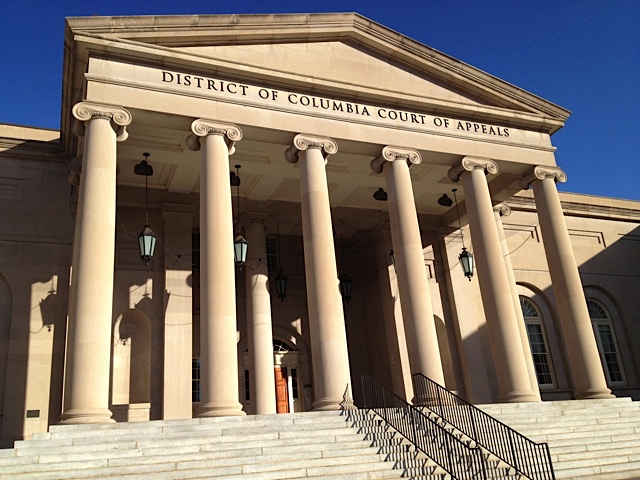
D.C. Court of Appeals Judge Catharine Easterly writes what I think. The difference is that she finds the words that elude me. And the words she writes impact D.C. law. Her impact continues in Antoine Mayhand v. United States, 127 A.3d 1198 (D.C. 2015). The “excited utterance” exception to the hearsay rule is over-used. Prosecutors can get lazy: How hard …
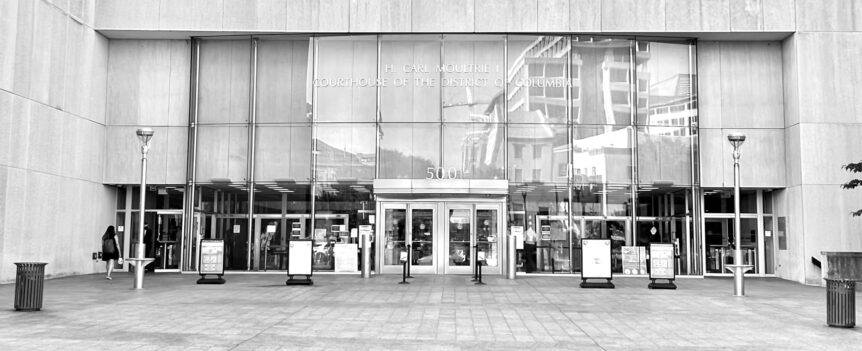
And sometimes the D.C. Court of Appeals gets it just right. For years, the Office of the Attorney General in D.C. has argued that stationhouse videos of suspects in DUI cases are not “discoverable”; that is, that they do not need to be preserved and turned over to the defense under D.C. Superior Court Rule of Criminal Procedure 16. Although …
Q: You are certified to administer the standardized field sobriety tests? A: Yes. Q: So you are familiar with the science behind the standardized field sobriety tests? A: Yes. Q: And you are aware that the tests have never been peer-reviewed? A: Um. I was not aware – HEARING EXAMINER: What is the relevance of this? A: That’s – HEARING …
DEFENSE COUNSEL: Objection. HEARING EXAMINER: Basis? DEFENSE COUNSEL: I would ask that the officer testify from memory and not read from his report. HEARING EXAMINER: Officer, are you testifying from memory or are you using the report to refresh your recollection? OFFICER: I am using the report for recollection. HEARING EXAMINER: Okay. And are you relying solely on the report …
Just because you repeat something over and over does not make it true. Nor are you permitted to “bolster” your own witness. A “prior consistent statement” – a witness’ previous statement that is consistent with something the witness testifies to while on the stand – is generally inadmissible. If it is an out-of-court statement offered for the truth of the …
You suspect it happens all the time: the prosecutor withholds exculpatory information from the defendant, thereby preventing the defendant from mounting an effective defense. The problem is that, with the government in sole possession of all the information, you have no way of proving it. And then there is Vaughn v. United States, 93 A.3d 1237 (D.C. 2014). With an …
A court accepts a well-known and indisputable fact without taking the time and trouble of requiring a party to prove it. What could be more straightforward, more commonsensical, than that? As McCormick puts it, the “oldest and plainest ground for judicial notice is that the fact is so commonly known in the community as to make it unprofitable to require …
It was a creative argument. But, not seeing it go very far, I was frankly surprised that the D.C. Court of Appeals devoted an entire opinion to it in Holmes v. United States, 92 A.3d 328 (D.C. 2014). Marvin Holmes was convicted of stealing two shirts from the Saks Fifth Avenue store in Friendship Heights. The store detective testified at …
Police questioning results in “testimonial” evidence if the primary purpose of the interrogation is “to establish or prove past events potentially relevant to later criminal prosecution.”
Police officers fail to preserve a critical piece of evidence, in this case a video recording taken of the incident in question. The defendant moves for sanctions. In opposing this motion, the government argues that the defendant’s arguments about what the recording contained is speculative. The court agrees. Am I missing something here? Without the opportunity to have actually watched …
According to Federal Rule of Evidence 401, the test for relevance is whether the evidence has a “tendency to make the existence of any fact that is of consequence to the determination of the action more probable or less probable than it would be without the evidence.” In other words, says McCormick, there are two components to relevant evidence: materiality …

McCormick on Evidence points out that you should avoid referring to “the exclusionary rule” in the singular: Discussions sometimes assume the existence of “the exclusionary rule,” suggesting that there is only one remedial requirement involved. This is unfortunate and misleading. Litigation and discussion is often dominated by considerations of the Supreme Court’s construction of the Fourth Amendment to the United …

One of the disadvantages to practicing law in D.C. is that the courts here do not use the Federal Rules of Evidence (FRE). You can’t just consult the text of a particular rule and then the case law that interprets that rule. Instead, you have to go directly to the case law or statute. This makes things unnecessarily burdensome. What …
The D.C. Criminal Jury Instructions provide a very helpful explanation with respect to the difference between direct and circumstantial evidence. The bottom line? One form is not necessarily preferable to the other. There are two types of evidence from which you can determine what the facts are in this case – direct evidence and circumstantial evidence. When a witness, such …
You know you are in trouble the moment the judge refers to “that Supreme Court case on confrontation.” He adds: “Robinson I think it is called.” The judge is a highly respected senior judge. Although you realize he doesn’t do many criminal cases, you are still somewhat taken aback by his comment. Robinson? Are you kidding me? Standing there with …

The Proof of the Common Law is by witness and jury: let Cobham he here, let him speak it. Call my accuser before my face . . . — Sir Walter Raleigh It is always difficult to predict how a witness will perform under the “crucible of cross-examination.” A far safer bet is to bring in the same testimony through …
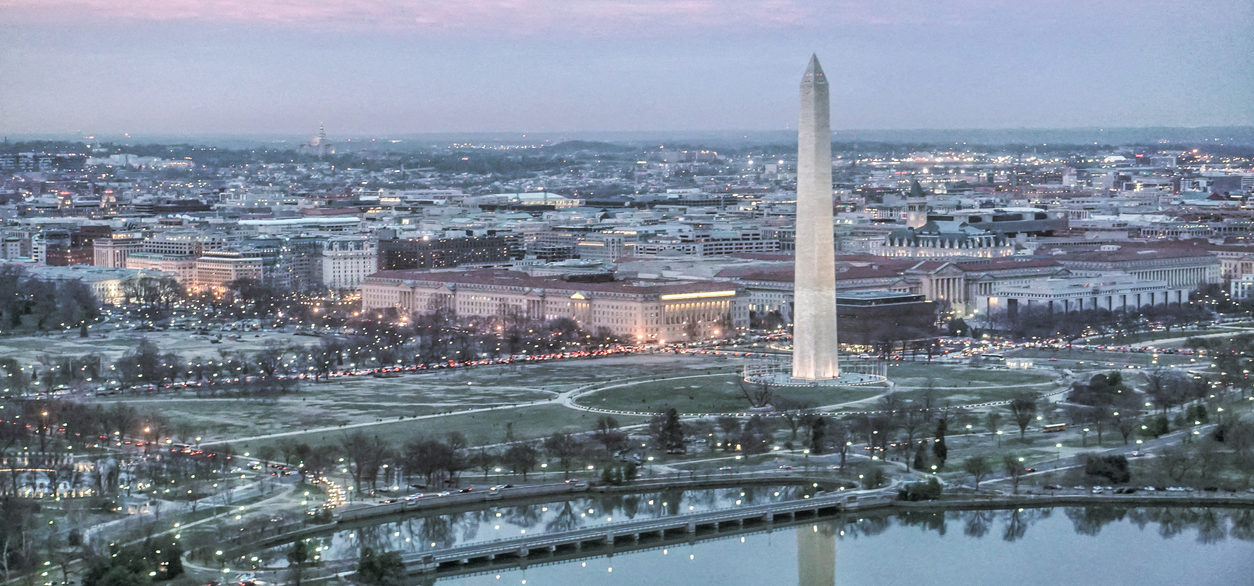
The Jencks Act was a nasty little surprise when I began to practice in D.C. It was not that I didn’t appreciate getting the information. It was that I was used to getting this information much earlier in the process in Pennsylvania. The Jencks Act, 18 U.S.C § 3500, requires the prosecution to turn over to the defense any “statement” of a witness …
I love appellate cases on evidentiary issues – which the D.C. Court of Appeals seems to be doing a lot lately — because they allow me to take out my handy-dandy McCormick on Evidence guide. According to McCormick, there are three things you need to know about the credibility of a witness: bolstering, impeachment, and rehabilitation. Impeachment and rehabilitation are straight-forward. …
Bias is “the powerful distorting effect on human testimony of the witness’s emotions or feelings towards the parties or the witness’ self-interest in the outcome of the case.” That is McCormick on Evidence, and it is the clearest, most accurate definition I have ever seen of what constitutes bias. McCormick continues: “[B]ias, or any acts, relationships, or motives reasonably likely to produce …
I like the government witnesses who fight with you on cross-examination, refusing to acknowledge even the most basic facts, like whether a particular street goes north-south or east-west. It is as though any concession at all to the defense will lose the case for the government. Although I have never been a judge or sat on a jury, I would …
I am a middle-aged man with some life experience. I have been doing criminal defense for a while now. Just yesterday I posted how many police officers “editorialize” when testifying. Still, I continue to be surprised – each time anew – every time a police officer gets up on the stand and lies. I should have seen the signs. There …
POLICE OFFICER: . . . The defendants knew they were not allowed in the store. DEFENSE ATTORNEY: Objection. THE COURT: Grounds? DEFENSE ATTORNEY: Your Honor, as to what the defendants knew, I’d object to that and move to strike. PROSECUTOR: Your Honor – THE COURT: Calls – PROSECUTOR: — I think he was saying the defendants – THE COURT: — …
It is a snippet of life from a CVS store in the District, viewed again and again through 15 different surveillance cameras. There is a 5-minute view from one camera – say, for example, at the entrance of the store. When that 5 minutes is up, you go back in time like the Bill Murray character in Groundhog Day to …
Over 65 years ago, Justice Robert H. Jackson, writing for the U.S. Supreme Court in Michelson v. United States, 335 U.S. 469 (1948), complained about the “helpful but illogical options” available to a defendant attempting to introduce evidence of his good character in a criminal trial: “We concur in the general opinion of courts, textwriters and the profession,” Jackson wrote, …
One of the things I miss most about working at the public defender’s office was the ability to get immediate feedback from colleagues on an issue. Do you know this judge or prosecutor? Have you faced this type of situation before and, if so, how did you handle it? And so on. A major drawback to this ability, however, is …
“No questions, Your Honor.” What could be more satisfying to say after your opponent has completed his direct examination than those four simple words? It is a challenge, a slap in the face with a folded glove. It is a declaration that the other side hasn’t touched you, hasn’t hurt you at all, with the testimony. It is like Muhammad …
I am a government witness in a criminal prosecution. The complaining witness is a former client, and I have been called to testify to a conversation I had with the defendant prior to a civil protection order hearing. The government will also use me to introduce parts of the transcript from that hearing. I know the Assistant Attorney General as …
Although the ability to cross-examine a witness is a critical component of the Sixth Amendment right to confront your accusers in a criminal case, this right is not without boundaries: “Once sufficient cross-examination has occurred to satisfy the Sixth Amendment, . . . the trial judge may curtail cross-examination because of concerns of harassment, prejudice, confusion of the issues, …
I have been called to testify in a criminal case. A couple of weeks ago I represented a woman seeking a civil protection order against a former boyfriend. With the boyfriend now facing criminal charges for contempt of court, certain admissions he made to me during the course of that representation have become relevant to the criminal proceedings. It …
Police officers love the “plain view” exception to the Fourth Amendment requirement for a warrant. It is because this exception is so straightforward and understandable: I didn’t need a warrant because I saw it with my own eyes. I immediately recognized it as contraband. So I grabbed it. All the other exceptions are much more complicated, and the law …
I am sitting in JM-15 at D.C. Superior Court watching a Georgetown University law student cross-examine a police officer on a drug case. The officer is doing the old “dumb officer” routine; that is, he can’t seem to understand any of the questions, even though it is perfectly clear to everyone else in the courtroom what the student is …
A proposal to install indoor surveillance cameras at Fairfax County schools in Virginia has created quite a controversy. With many parents still upset over harsh disciplinary practices in the schools that have led to a couple of suicides, critics of the proposal have expressed concern over any further encroachment on the civil liberties of students. They see the proposal …
The right to cross-examine witnesses is one of the defendant’s most important trial rights. And, among the areas for cross-examination, what could be more important than bias? An inability to accurately perceive events could result in an honest mistake. Bias suggests that the witness might be deliberately coloring the testimony. In Blades v. United States, 25 A.3d 39 (D.C. 2011), …
The firmly established “collective knowledge” doctrine in D.C. provides that, in determining whether the officers possessed sufficient knowledge to establish reasonable suspicion or probable cause for a search or seizure, it is not what any individual officer knows but what the officers know collectively, whether or not the information is actually communicated from one officer to another. At the …
I have only seen one “law library” at a prison, and I have to say I was not at all impressed. A converted broom closet with a broken chair and a rickety metal bookshelf, the library consisted mostly of an outdated version of the criminal code, a dog-eared hornbook or two, and, because someone apparently decided they might lend an …

When I was a public defender in Philadelphia, my office mate used to come across me reading transcripts from court hearings I had done and kid me. I thought I was being conscientious, working to make myself a better lawyer. He thought I was being vain. Testimony from every preliminary hearing we did was automatically transcribed in advance of the …
David P. Baugh was one of the speakers at a Virginia Trial Lawyers Association CLE I attended yesterday. Baugh is perhaps best known for defending the free speech of a Ku Klux Klan member in a trial that resulted in the U.S. Supreme Court case of Virginia v. Black, and, surprise, surprise, he turns out to be a dynamic and …
Many years ago, as a student at the University of Freiburg in Germany, I went with an American friend to West Berlin to sightsee. We went to a bar one night in which we were taken for some money by the bar’s establishment. The two of us were so embarrassed by the whole thing (we couldn’t believe we had fallen …

I have written a number of posts over the last couple of months about the Donald E. Gates case. As you will recall, Gates was convicted of a crime he did not commit and initially spent 16 years in jail in large part due to the false testimony of former FBI analyst Michael P. Malone. In 1997, after the government …
I have written a number of entries over the last couple of months about the case of Donald E. Gates, a man who was imprisoned for 27 years for a crime the evidence now shows he did not commit. Gates was convicted in large part on the basis of false testimony by FBI analyst Michael P. Malone. Donald Gates, as …

This guy has his eye put out in an accident. He can’t afford a glass eye, so the eye doctor puts in a fake eye made of wood instead. The guy is very self-conscious about his wood eye, but finally his friends talk him into joining them at a dance. It is time, they say, for him to get back …