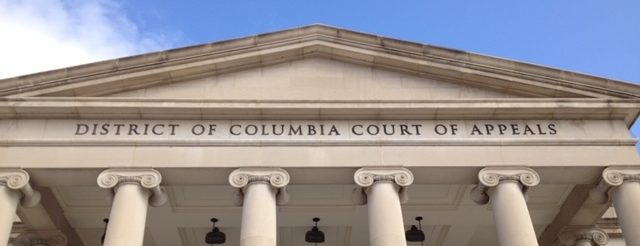
The D.C. Court of Appeals recently reversed four firearm convictions after concluding that police lacked reasonable articulable suspicion to stop the defendant. But Johnson v. United States, No. 24-CF-0525 (D.C. Sept. 3, 2026), is notable for another reason. Writing for a unanimous three-judge panel in her typically understated way, Judge Catharine Easterly criticized the trial court’s handling of the defendant’s motion …

Another win in D.C. Superior Court anti-stalking order (ASO) trial
Koehler Law prevailed yesterday at another trial in the Domestic Violence Division of D.C. Superior Court. The court denied an anti-stalking order (ASO) petition filed against our client, who was the respondent in the case. Angry or Offensive Words May Be Protected by the First Amendment The parties were neighbors whose backyards abutted each other. Their dogs were the primary …
Simple assault charge dismissed in D.C. Superior Court
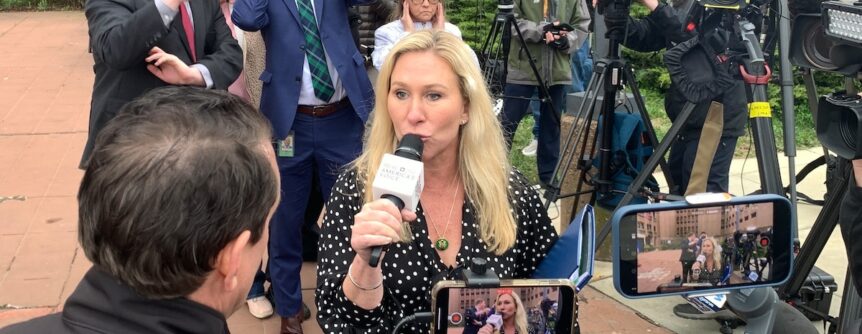
The government recently dismissed a simple assault charge against a Koehler Law client in Washington, D.C. The dismissal came after the defense produced evidence supporting our client’s claim that he had acted in self-defense. Our client, an 86-year-old man, had been accused of pushing a much younger woman who approached him with a camera during a political demonstration on the …
Respondent in CPO case awarded attorney fees in D.C.
A Koehler Law client was recently reimbursed for his attorney fees after prevailing as the respondent in a civil protection order (CPO) case in Washington, D.C. The court awarded fees after concluding that the petitioner had brought the case in bad faith, fabricated evidence, and committed perjury at trial. The “American Rule” for Attorney Fees Under the so-called “American Rule,” …
D.C. jury acquits Koehler Law client of CPWL
A D.C. jury recently acquitted a Koehler Law client of carrying a pistol without a license (CPWL) and other firearm offenses. According to the evidence presented at trial, our client found an abandoned firearm in an alley near the shopping mall where he worked. He picked up the gun intending to turn it over to the police. Before he could …
“True Threats” and Stalking in Rokhvand v. Herzfeld
The D.C. Court of Appeals recently clarified what constitutes a “true threat” for purposes of the District’s stalking statute. In Rokhvand v. Herzfeld, 2026 D.C. App. LEXIS 302 (D.C. Aug. 27, 2026), the court held that hostile or offensive political speech does not become a true threat merely because it causes fear or distress. What constitutes a criminal threat in D.C.? …
Why settle a civil protection or anti-stalking order case in D.C.?
The petition for a civil protection order (CPO) against a Koehler Law client was dismissed recently after the parties reached an out-of-court settlement. Our client no longer faces the legal, social and other consequences posed by a court-enforceable civil protection order (CPO). And the petitioner received the assurances she needed to feel comfortable. WHAT IS A CIVIL PROTECTION ORDER IN D.C.? …
D.C. Court dismisses petition for anti-stalking order
People seek anti-stalking orders (ASOs) in Washington, D.C. for many different reasons. Some petitions involve conduct that legitimately falls within the protections provided by the ASO statute. Others arise from interpersonal disputes that, while frustrating or upsetting, do not satisfy the statutory requirements for stalking. For example, a person may seek an anti-stalking order because of problems with a neighbor, …
Crowded dockets delay CPO and ASO hearings in D.C.
Presiding over civil protection order (CPO) and anti-stalking order (ASO) cases is one of the most demanding assignments for D.C. Superior Court judges. Each morning, parties begin logging on at 8:30 a.m. The calendar typically includes 20 to 40 cases. Two judges—currently Judge McCabe in Courtroom 113 and Judge Truong in Courtroom 114—must move through that crowded docket while dealing …
Willful blindness in the reflecting pool cases
At some point, there will be a reckoning. The reckoning may be a public one: Lawyers hauled before the D.C. bar to face potential disciplinary proceedings. It may also be a purely private reckoning. It may be looking into the mirror and asking oneself the question: Am I proud of how I acted during this time? ***** On June 20, …
Burglary, robbery and assault charges dismissed in D.C. Superior Court
The government recently dismissed burglary, robbery, and assault charges against a Koehler Law client in D.C. Superior Court. The key to the case was investigation. Ring camera footage, building surveillance video, and cell phone records contradicted critical parts of the complainant’s account. The evidence gathered by our investigator, Robert Kapler, ultimately helped secure the dismissal of every charge against our …
Should your CPO/ASO case “trail” your criminal matter?
Domestic violence charges in criminal court are frequently accompanied by a petition for a civil protection order (CPO) or anti-stalking order (ASO). This is because one incident can lead to two separate cases – one criminal and the other civil. The target of misconduct allegations can be simultaneously the defendant in a criminal case and the respondent in a civil …
Hit-and-run charges dismissed in D.C.
The government has dismissed charges against a Koehler Law client in a hit-and-run case. Our client was accused of leaving the scene of an accident involving personal injury without calling police or providing identifying information. We were able to produce evidence that our client had in fact called 3-1-1, which is the non-emergency number for police. We also had an …
Should I consent to a “CPO without admissions?”
If you are the Respondent in a civil protection order case, everyone else involved in the proceedings will want you to agree to a “consent CPO without admissions.” With 30 to 40 cases on the docket each day, the court wants to avoid a trial. The petitioner will be awarded the protection order risk-free. And it will be attorney-negotiator’s job …
Resisting arrest charges dismissed in D.C.
Resisting arrest charges against a Koehler Law client were dismissed recently by the government. This was after our trusty investigator Robert Kapler secured surveillance recordings that conclusively disproved the claims of Secret Service officers. As I often tell Robert, sometimes our wins are attributable to my legal acumen. Other times we win because of what he produces. This win belongs …
Koehler Law honored as top 100 legal blog
I received notice the other day that my criminal defense blog – the Koehler Law blog – has been included as a top 100 legal blog by Feedspot. This is an honor. I know that many such honors are extended as a way either to generate revenue for the party doing the honoring or to attract clicks through back-linking. Many …
D.C.’s ban on 11+ magazines is unconstitutional
The D.C. Court of Appeals has struck down as unconstitutional the District’s ban on high capacity magazines for firearms. Specifically, the court found recently in Benson v. United States, 2026 D.C. App. LEXIS 80, that the prohibition against magazines capable of holding more than 10 rounds of ammunition – what the court refers to as 11+ magazines – violates …
Koehler Law client found not guilty after D.C. simple assault trial
A Koehler Law client was acquitted of simple assault after trial last week in D.C. Superior Court. Our client was charged with simple assault after he was accused of threatening another person with a knife. The case was the second of two misdemeanor trials heard by the same judge that day. Both trials resulted in not-guilty verdicts. Back-to-back trials as …
Defining “malice” in destruction of property case in D.C.
Roman Wiley (aka Kamaal Mumin) believed he owned a particular house in D.C. This, as it turns out, was a delusion. The real owner, who was renovating the property, kept finding Wiley on the property. At one point, Wiley changed the locks on a wrought-iron gate securing a back door. He did this by unfastening the two screws that kept …
“Trumping” the U.S. Attorney’s Office in D.C.
Donald Trump has the opposite of the “Midas touch”: He diminishes everything he comes into contact with. It is hard, for example, to think of a single individual who has emerged from an association with Trump with an enhanced reputation. Take Rudy Giuliani. He was once “America’s Mayor.” Now he will be forever remembered as the shyster hawking crazy conspiracy …
On the doctrine of “inherent incredibility” in Carrington
The D.C. Court of Appeals will typically defer to the trial judge on any question pertaining to the credibility of a witness. After all, it was the trial judge, not the appellate court, who witnessed the testimony in person. A narrow exception to this deference is known as the doctrine of “inherent incredibility.” Judges are only human. A ruling can …
On threats and the attorney-client privilege in Moore
The “attorney-client privilege” protects confidential communications between a client and their attorney. As an exception to the general rule that all relevant facts should be available in the truth-seeking process, the purpose of the privilege is to encourage clients to be open and honest with their lawyers. The privilege belongs to the client, not the attorney. It can cover oral, …
When is D.C. person seized for Fourth Amendment purposes?
The first question in any case in which the legality of a Fourth Amendment search is being challenged is when the seizure occurred. The next question then becomes: What did police officers know at the time of this seizure? If the facts known to them constituted either reasonable suspicion or probable cause, then the seizure was legal. If there was …
Defining a “high crime area” in Mayo v. U.S.
“High crime area.” Police officers invoke this phrase all the time. Like “furtive movements, “suspicious bulge” or “excited utterance, it is a legal sounding phrase they use to justify what might otherwise be an illegal detention. Police include it in their toolkit of phrases to throw out when drafting a police report or testifying on the stand. The phrase was …
Breaking the criminal justice system in D.C.
Donald Trump claims, against all evidence, that something is broken. With great bluster, he breaks that something. He then uses the thing he broke to prove he was right to begin with. Given the stakes involved in any decision made by an American president, this is a particularly disturbing form of a self-fulfilling prophesy. ***** D.C. does not have the …
On the withdrawal of consent in Ford v. U.S.
A defendant can consent to a Fourth Amendment search or seizure, thereby obviating the need for a warrant. A defendant can limit the scope of the consent – as in, “you can search the living room but not my bedroom.” A defendant can withdraw consent at any time. And the assertion of any of these rights cannot be used …
On the “plain feel” doctrine in Ford v. U.S.
Absent a valid exception, “searches and seizures” without a warrant are presumptively unreasonable under the Fourth Amendment. As one exception to the warrant requirement, the “plain view” doctrine allows police officers to seize evidence without a warrant if (1) the officers are lawfully present in a location, (2) they observe the contraband in plain sight, and (3) the incriminating nature …
A “Koehler Goodbye”
We have always loved extended goodbyes in my family – the more over the top, the better. We used to do what we eventually began to call the “Koehler goodbye” in front of our house on Hills Road in Amherst. It was best if you were still barefoot and in your night clothes, preferably in snow or rain, everyone …
On the Victims of Violent Crime Fund (VVCF) in D.C.
The Victims of Violent Crime Fund (VVCF) in D.C. provides financial assistance to victims of violent crimes and their families. Funded primarily by court-ordered fees collected from people who are convicted of crimes in the District, the VVCF can reimburse people for funeral and burial expenses, medical and mental health care, lost wages and, for domestic violence victims, temporary shelter. …
Defining a “Testimonial Statement” under Crawford
The Proof of the Common Law is by witness and jury: let Cobham he here, let him speak it. Call my accuser before my face . . . — Sir Walter Raleigh Unable to confront his accuser at trial, Sir Walter Raleigh was convicted of treason in 1603. Outrage over the circumstances of his trial is believed to have played …
On “reliable hearsay” in Parker/Rollerson
Hearsay is presumptively unreliable. That is why the law makes it so difficult to introduce hearsay into evidence. McCormick on Evidence § 244 refers to the “tale of a tale.” With the out-of-court witness not under oath and not subject to cross-examination, the major problem with this “story out of another man’s mouth” is that the party against whom …
Unlawful entry and the “independent justification requirement”
According to the “independent justification” requirement, an order to leave public property must be given by a person with authority based on some established policy, rule or regulation. Otherwise, the government cannot prove the elements of the criminal offense of unlawful entry. *** Dr. Derek J. Morris was attempting to file a pro se petition for a writ of certiorari …
The “voluntary intoxication” defense in D.C.
According to recent opinion issued by the D.C. Court of Appeals, Darrell Jones v. United States, __ A.3d __ (D.C. 2025), the defense must prove “incapacitating intoxication” in order to negate the mens rea element of a criminal offense. ***** “Voluntary intoxication” is generally not a viable defense to a criminal charge in Washington, D.C. As Joshua Dressler puts it …
D.C.’s new sealing/expungement law needs fixing
[Update: D.C. Council resolved the problems described below through the “Peace DC Omnibus Emergency Amendment Act of 2025.”] There are major problems with D.C.’s new criminal record sealing/expungement statute. D.C. Code § 16-801 et. seq. For example, according to one reading of the statutory language, a person charged with a violent felony can seek immediate relief through a motion …
Ode to D.C. Superior courtroom clerks
Jada Aristilde, one of my favorite courtroom clerks, has left the building. Ms. Aristilde leaned over to me in courtroom 314 earlier this week after my case was called to tell me that that was her last day. She will be devoting herself full time to her practice as a realtor. I have told this story before but I will …

On interacting with the jury after trial
Trying to read the jury can be a humbling experience. Many years ago, during a DUI trial in D.C., I was encouraged by a young man in the front row who, listening intently, seemed to agree with everything I said. “This is great,” I told my client. “I think we have at least one juror in our corner.” As it …
“No matter what” and the U.S. Attorney for D.C.
“No matter what.” These are chilling words to hear from any law enforcement official. After all, given the enormous stakes involved in a criminal prosecution, restraint has to be the operative word. It is thus particularly concerning when these words are uttered by the chief federal law enforcement official for the nation’s capital and when the words are targeted at …
On sycophants, yes men and self-respect
Here is the recently released statement of Edward R. Martin, the new U.S. Attorney for the District of Columbia: “I want to thank President Trump for trusting me to re-establish law and order in Washington, D.C. It is the honor of my lifetime to accept his nomination as Interim U.S. Attorney for the District of Columbia. I pledge to …
“Not guilty” in two cases and on all counts
Trials can be challenging. The stakes are high, and the pressure can be unrelenting. I have been feeling the strain. It was therefore particularly gratifying to win across-the-board acquittals in two back-to-back jury trials: three counts of “not guilty” in the first case and six counts of “not guilty” in the second. We argued self-defense in the first case and …
Extending a civil protection order in D.C.
In order to extend a civil protection order (CPO) in Washington, D.C., the petitioner must show “good cause” that the protective order is still needed.
“Fake news” and the license to be ignorant
Ignorance used to be something to be ashamed of. Now we seem to celebrate it. It is anti-elitist. It proves our connection to the common man.
Trial transcript: Exposing your rookie partner to firearm
Q: . . . Officer. Based on the still shots I have just reviewed with you, do you see anywhere where Mr. Smith grabs his waist before he starts to run?
A: No.
On the declaration of a mistrial in Walker v. U.S.
A mistrial, the Court held, cannot be declared over defense objection unless “manifest necessity” requires it. A hung jury is one example of manifest necessary. The interruption of trials that were underway when the pandemic first hit was another.
Narrowing the definition of kidnapping in Cardozo v U.S.
To “hold or detain somebody in the context of the District’s kidnapping statute . . . means to detain them for a substantial period of time, so that the perpetrator could fairly be described as holding another captive like a hostage or a prisoner.”
MAGA’s introduction to our criminal justice system
We have learned that the same rules apply to everyone. It does not matter if you are a homeless person or the former president of the United States.
Editorializing about Miranda rights in Green v. U.S.
Although police officers are not required to read the Miranda rights verbatim, any editorializing risks confusing the suspect, thereby nullifying the warning.
Negotiating the “proffer of facts” in a plea agreement
As part of a plea agreement, the government typically requires the defendant to agree to a “proffer of facts,” a written statement of the evidence the government would have proven had the case gone to trial.
Cross-examination on a “confidential location”
“Confidential location.” An officer utters these two words in a drug case, and the court automatically shuts down all related cross-examination.
D.C.’s new criminal record sealing and expungement statute
Scheduled to take effect in January 2026, D.C.’s new criminal record sealing and expungement statute should make it much easier for people to move on from a criminal past.
Storming the Capitol in Larson-Olson v. U.S.
It was hard to argue that there was insufficient evidence to convict Larson-Olson of unlawful entry when recordings showed defendant struggling with police.
On 4th Amendment seizures and abandoned property in U.S. v. Pope
When is a person seized for Fourth Amendment purposes? When is a piece of property abandoned such that there is no longer reasonable expectation of privacy?
Renewal of CJA Panel for 2024
Chief Judge Josey-Herring issued an order on March 15, 2024 that renewed the list of attorneys eligible to accept appointments under the Criminal Justice Act.
Ode to a legal career
When I say how good Emma would be at the practice of law, her mother — my little sister — points out that Emma is really an academic at heart.
On receiving stolen property in Lucas
According to recent D.C. Court of Appeals decision, “possesses” stolen property refers to the continuing act of being in possession of the property, not the act of taking possession at the time of acquisition.
Looking for “white spaces” in the prosecution’s case
Experienced criminal defense attorneys have taught me to to look for “white spaces” in the government’s case.; that is, to focus on what is NOT there.
Evans v. U.S.: More on the innocent possession of a firearm
According to the “innocent possession of a firearm” defense in D.C., it is permissible to use in self-defense what might otherwise be an unlawful firearm.
A man with a destination
Dressed nicely and sitting outside the lawyer’s lounge, the woman always appeared to be speaking on the phone about some weighty constitutional issue.
On the fumbling hand of counsel
According to the 6th Amendment, the lawyer who accepts representation in a criminal case must affirmatively assist with the defense, thereby advancing it.
Storming the Capitol with Jenna Ellis
There never was an “elite strike force team.” Nor was there any significant election fraud. It is hard to believe that this second-rate lawyer once had the ear of the President.
Riding the Acela with Matt Gaetz
I spend a lot of time on the Acela. So too do other people I have encountered over the last year or so: Tony Fauci, Matt Gaetz, Elise Stefanik and others.
Limiting re-cross examination in Sanchez v. U.S.
Criminal defendants have a constitutional right to confront their accusers. In D.C., however, this right does not necessarily extend to recross examination.
Lousy plea offers. More trials.
We got spoiled during the pandemic with favorable plea offers. The government was trying to resolve as many cases as possible. Those times are over.
Checking the room for U.S. Marshalls
Judges love to keep us in suspense. Before announcing a verdict, they like to give us a detailed description of their reasoning. This can be excruciating.
T.W. and the “jump out” cops in D.C.
All over the District, young black men are lifting their shirts to show their waists as the unmarked cars cruise past. This is because of the “jump out” cops.
On searching a car after POCA arrest in Smith v. U.S.
Even if officers had legal basis for searching the car based on the fact that POCA is an arrestable offense, they still did not have authority to search box.
Trial Transcript: “Bad karma” and other deadly threats
BY RESPONDENT’S COUNSEL Q: Okay. And at some point – Mr. Jones is from Russia, right? A: Yes. Q: And at some point he came back to the United States and he sought to re-initiate his romantic relationship with you, right? A: Yes. Q: And – and you were not interested in, in resuming that romantic relationship, right? A: Correct. …
On ineffective assistance of counsel in Dugger v. U.S.
A seasoned criminal defense lawyer was replaced by someone who had never before tried a criminal case. Not surprisingly, things did not go well for defendant.
Rest in Peace, Noah Clements
Friend and former colleague Noah Clements died last night, just after 11:00 pm. He leaves behind his wife and their three children: Wiley, Eric, and Elise.
Eliminating uncertainty through a Rule 11(c)(1)(C) plea
Rule 11 of the D.C. Rules of Criminal Procedure provides for a plea agreement in which both sides agree on the sentence that will be imposed.
Cross-examining the “unreliable narrator”
Our goal as criminal defense attorneys is to turn opposing witnesses into unreliable narrators: Storytellers who should be punished for violating our trust.
On “true threats” in Counterman v. Colorado
For a threat to be unprotected by the First Amendment, the prosecution must prove that the defendant subjectively understood that the statement could be perceived as threatening.
Narrowing the scope of D.C.’s stalking statute in Mashaud v. Boone
In Mashaud v. Boone, the D.C. Court of Appeals limited the scope of unprotected speech under District’s stalking statute to threats, obscenity, defamation, fraud, incitement, and speech integral to criminal conduct.
The Alibi defense in D.C.
From the Latin for “elsewhere,” an alibi defense is based on the physical impossibility of a defendant’s guilt: the defendant could not have committed the crime because he or she was somewhere else at that same time.
On “offensive touching” assault in D.C.
The defendant “poked” the complainant somewhere on the body after having been specifically admonished not to do so. Such an “offensive touching” constituted a criminal assault.
Quashing a CPO Petition in D.C.
The court’s ability to hear a CPO matter in Washington, D.C. requires proof of an “intra-family offense” with sufficient connection to the District.
Life and other lessons from on-line gaming
It is almost as if our former President intentionally peppers his unhinged and whiny tweets with spelling and grammatical errors. He wants to show his devoted followers he is just like they are.
A “two-tiered justice system” at the D.C. Jail
Yes, Marjorie Taylor Greene, there is a two-tiered justice system in effect at the D.C. jail. Unlike their black and brown counterparts at the Central Detention Facility, the J6 defendants are being held in relative comfort at the Correctional Treatment Facility.
Farewell to Judge William Nooter
Retiring D.C. Superior Court Judge William Nooter was honored at a surprise farewell for him.
2023 Assignments for D.C. Superior Court
Here are the 2023 judicial assignments for the Criminal Division of D.C. Superior Court.
Performance theater serving a purpose
Sometimes you need to say things for no other reason than that the client will hear you.
Shoutout to the AUSAs in D.C.
Given my experience with county prosecutors in Philadelphia and Virginia, it was a welcome surprise to begin working with Assistant U.S. Attorneys in D.C.
As-salamu alaykum. Have a blessed day.
I look forward to seeing him every morning. We do our little exchange, our private joke, and then we fist bump, and I continue onto the metro smiling and in much better spirits.
Winter came
This is why we say goodbye. Letting go is what it comes to.
I told you so
Sometimes you need to exercise your right to remain silent. Sometimes you should take your lawyer’s advice.
Forever houses
My wife has a history of agreeing to rent or buy the first place we visit whenever we are looking for a place to live. This is great, she says. We’ll take it.
On a client’s changing expectations
Client expectations can fluctuate wildly, even within a given case. A big part of our job is to make sure these expectations are both informed and realistic.
The “Rule of Lenity” in D.C.
According to the “Rule of Lenity,” a court should construe any ambiguity in the language of a criminal statute in favor of the defendant.
On working with indigent criminal defendants
Five tips for representing indigent criminal defendants: (1) never push a plea, (2) don’t defend the system, (3) never contradict your client, (4) a light touch often works best, and (5) a thick skin will prevent burnout.
On the “Claim of Right” Defense in D.C.
Although “claim of right” is a valid defense to robbery and other theft offenses, the defense fails when the defendant takes more than the property whose ownership is in question.
Webex Login for Criminal Division Courtrooms
Here is the information you will need to log in by Webex video or phone to D.C. Superior Court Criminal Division courtrooms.
D.C. Superior Court Criminal Division: Judicial Assignments for 2022
Here are the 2022 Judicial Assignments for the D.C. Superior Court Criminal Division
The “forfeiture-by-wrongdoing” doctrine in Hairston
Under the ‘forfeiture-by-wrongdoing doctrine, a defendant forfeits his Sixth Amendment right to be confronted by a witness against him, as well as his objection to the introduction of hearsay, if he wrongfully procured the unavailability of that witness with the purpose of preventing the witness from testifying.
Bias and corruption in Jones v. US
Bias can be “a favorable or friendly feeling toward a party.” It can also be hostility toward someone, a motive to lie out of self-interest, and/or corruption.
Beating an attempted drug possession case
Now that DFS has lost its accreditation, the government is looking for creative ways to prosecute drug possession cases, including amending the charges to attempted possession. There are equally creative ways to counter this strategy.
Cross-examining a GRU officer
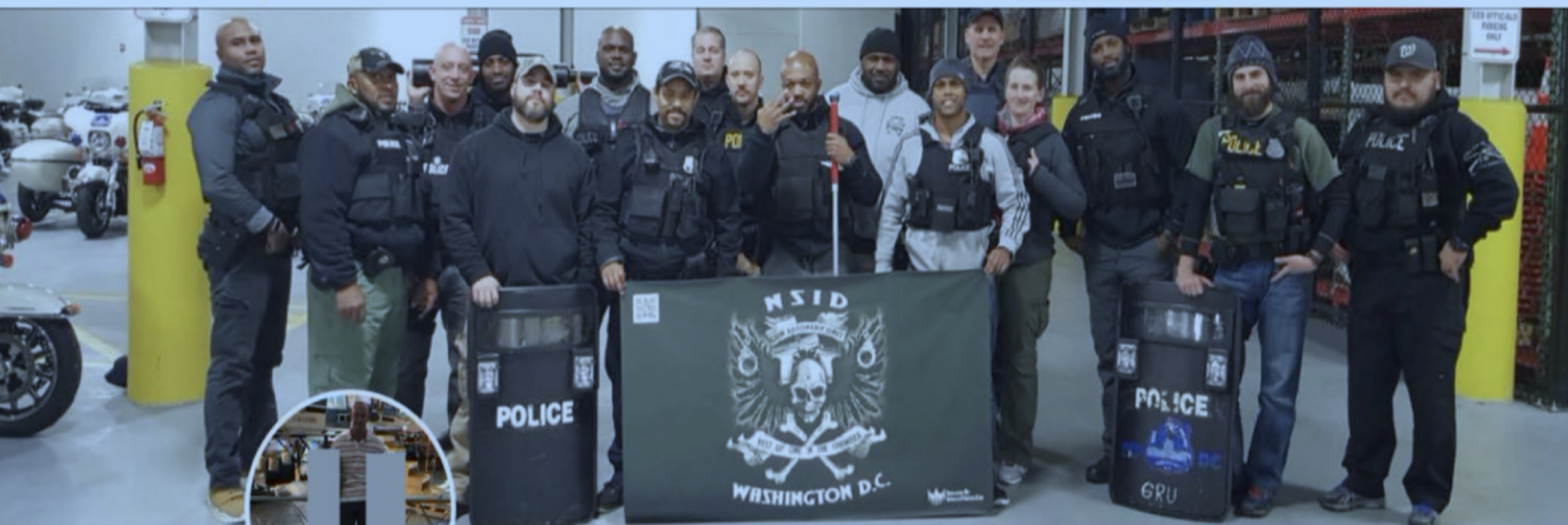
I won a motion to suppress in a drug case yesterday. The win was particularly gratifying in that it involved the notorious gun recovery unit (GRU) from the Metropolitan Police Department. One of the lead officers for the GRU testified for the government, and he was a difficult witness: He would not concede a thing. I usually begin with some innocuous questions. …
On reasonable suspicion in Funderburk
Police had the requisite legal basis – reasonable suspicion – to assume that one of four people present after gunshots were heard was the shooter.
People are naturally contrarian
People are, I believe, naturally contrarian. The question is how to use this phenomenon to your advantage at trial.
On Judicial Notice and Mejia-Cortez
Although a court may take “judicial notice” of commonly known facts, the government must still prove every element of a criminal offense beyond a reasonable doubt.
Criminal Division to expand operations
The Criminal Division of D.C. Superior Court will expand in-person operations beginning on Tuesday, September 7.
On the importance of being heard
The Zulu greeting “Sawubona” translated literally means “I see you.” Because it is important to be seen.