Notes from practice · D.C. Superior Court

Unlawful entry charge dismissed
According to recent D.C. Court of Appeals opinion, Foster v. United States, D.C. Housing Authority residents cannot be barred from accessing areas covered by their...
Defining “possession, custody, or control” for Rule 16 purposes
In Weems v. United States, 191 A.3d 296 (D.C. 2018), the D.C. Court of Appeals defines “possession, custody, or control” for purposes of Rule 16....
Client acquitted of destruction of property
The evidence suggested that our client intended to exit the store, not damage property. There was also a question as to who actually broke the...
Unlawful entry: Barring notice must be valid
In unlawful entry cases in which the defendant is charged with violating a DCHA barring order, the underlying order must be authorized by D.C. statute....

“Present Sense Impression” in Sims v. United States
In addition to contemporaneity and spontaneity, the proponent of a “present sense impression” hearsay exception must prove that the declarant personally perceived the event described....
Re-cross examination in Green v. United States
If the government introduces new evidence during re-direct examination, the defense has a constitutional right to question the witness about that new evidence....
Unlawful Entry in Rahman v. United States
The court found in Rahman v. U.S. that remaining in a restaurant for 10 minutes after being asked to leave was sufficient to be found...

Leaving After Colliding in D.C. requires proof of mens rea
In Crawford v. D.C., the Court of Appeals confirmed that the Leaving After Colliding statute requires the government to prove mens rea....

High v. U.S.: Cross Words and Police Officers
I tried to argue a while back that, when it comes to D.C.’s statute on Threats to do Bodily Harm, parking enforcement officers should be...
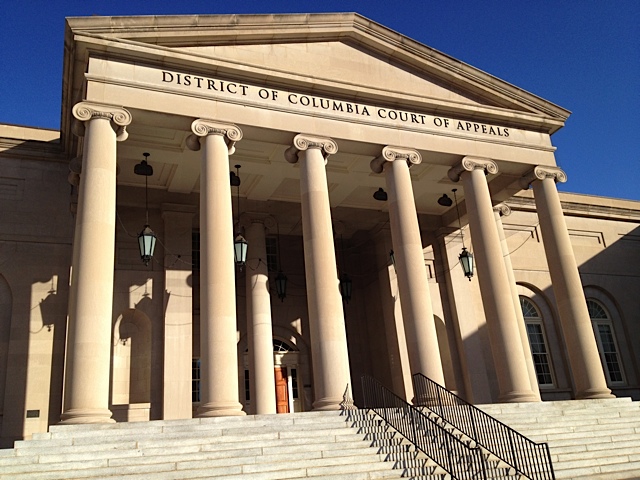
Mayhand v. U.S.: “A Statement is Not an Excited Utterance Unless the Declarant is Manifestly Overcome by Excitement or in Shock.”
D.C. Court of Appeals Judge Catharine Easterly writes what I think. The difference is that she finds the words that elude me. And the words...

Teneyck v. U.S.: What is Significant Bodily Injury Under the Felony Assault Statute?
The D.C. Court of Appeals has issued a number of opinions over the last couple of years in which it has refined the definition of...

Stationhouse Videos in DUI Cases Are Discoverable
And sometimes the D.C. Court of Appeals gets it just right. For years, the Office of the Attorney General in D.C. has argued that stationhouse...

Saidi v. U.S.: No Special Findings in Defense-of-Property Case
You are allowed to use a reasonable amount of force to protect property. This is true “regardless of any actual or threatened injury to the...
Gayden v. U.S.: Interpreting the “Resist” and “Intimidate” Provisions of D.C.’s APO Statute
In Cheeks v. United States, a case issued a couple of months ago, the D.C. Court of Appeals interpreted the “interfere” provision of D.C.’s Assault...
Cheek v. U.S.: Interpreting the “Interfere” Language of D.C.’s APO Statute
The Assault on a Police Officer (APO) statute is so broad that the D.C. Court of Appeals has had to issue multiple opinions to interpret...