Notes from practice · D.C. Superior Court
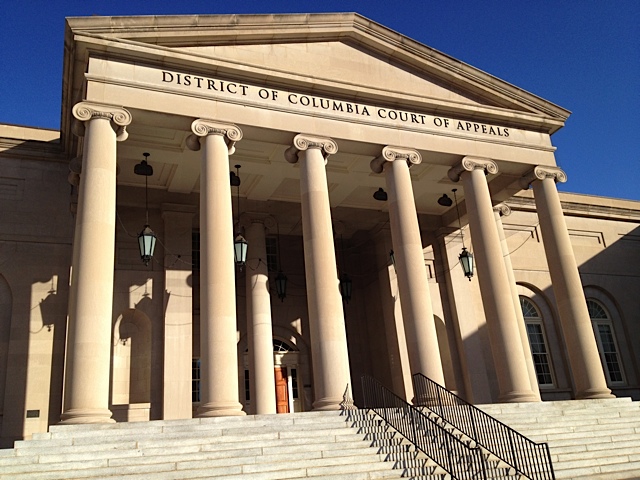
Mayhand v. U.S.: “A Statement is Not an Excited Utterance Unless the Declarant is Manifestly Overcome by Excitement or in Shock.”
D.C. Court of Appeals Judge Catharine Easterly writes what I think. The difference is that she finds the words that elude me. And the words...
Stationhouse Videos in DUI Cases Are Discoverable
And sometimes the D.C. Court of Appeals gets it just right. For years, the Office of the Attorney General in D.C. has argued that stationhouse...
Police Officer as Expert at DMV Hearing
Q: You are certified to administer the standardized field sobriety tests? A: Yes. Q: So you are familiar with the science behind the standardized field...
Refreshing Recollection at a DMV Hearing
DEFENSE COUNSEL: Objection. HEARING EXAMINER: Basis? DEFENSE COUNSEL: I would ask that the officer testify from memory and not read from his report. HEARING EXAMINER: ...
Worthy v. United States: The DCCA on Prior Consistent Statements
Just because you repeat something over and over does not make it true. Nor are you permitted to “bolster” your own witness. A “prior consistent...
Judge Easterly Lets The Facts Speak For Themselves In Damning the Government for Brady Violations
You suspect it happens all the time: the prosecutor withholds exculpatory information from the defendant, thereby preventing the defendant from mounting an effective defense. The...
Judicial Notice: The Difference Between “Legislative” and “Adjudicative” Facts
A court accepts a well-known and indisputable fact without taking the time and trouble of requiring a party to prove it. What could be more...
Holmes v. United States: Video-Assisted Testimony Not Hearsay
It was a creative argument. But, not seeing it go very far, I was frankly surprised that the D.C. Court of Appeals devoted an entire...
Refining the Definition of “Testimonial Evidence” under Crawford v. Washington
Police questioning results in “testimonial” evidence if the primary purpose of the interrogation is “to establish or prove past events potentially relevant to later criminal...
The Duty to Disclose Includes the Duty to Preserve
Police officers fail to preserve a critical piece of evidence, in this case a video recording taken of the incident in question. The defendant moves...
Relevant = Material + Probative
According to Federal Rule of Evidence 401, the test for relevance is whether the evidence has a “tendency to make the existence of any fact...

Do the Exclusionary Rules Deter Illegal Conduct?
McCormick on Evidence points out that you should avoid referring to “the exclusionary rule” in the singular: Discussions sometimes assume the existence of “the exclusionary...

Motive, Intent, Identity, and Absence of Mistake Under Drew
One of the disadvantages to practicing law in D.C. is that the courts here do not use the Federal Rules of Evidence (FRE). You can’t...
The Difference Between Direct and Circumstantial Evidence in D.C.
The D.C. Criminal Jury Instructions provide a very helpful explanation with respect to the difference between direct and circumstantial evidence. The bottom line? One form...
What is a “Testimonial Statement” under Crawford v. Washington?
Crawford held that a “testimonial” statement can only be admitted if: (1) the government can prove that the witness was unavailable to testify, and (2)...