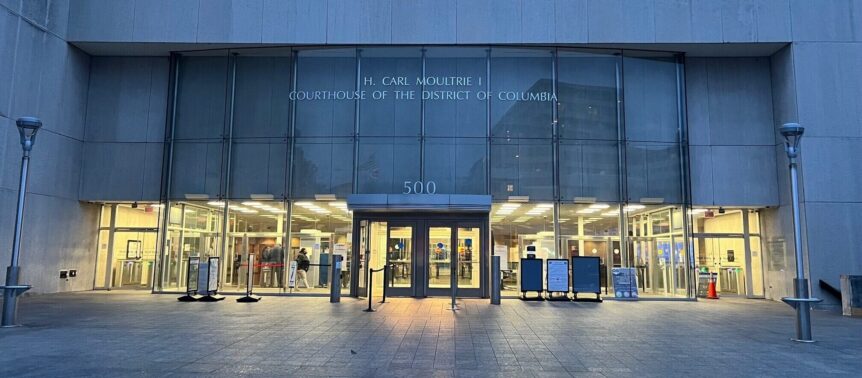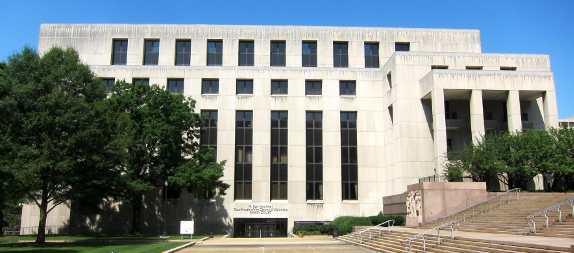
Koehler Law prevailed yesterday at another trial in the Domestic Violence Division of D.C. Superior Court. The court denied an anti-stalking order (ASO) petition filed against our client, who was the respondent in the case. Angry or Offensive Words May Be Protected by the First Amendment The parties were neighbors whose backyards abutted each other. Their dogs were the primary …

D.C. Court dismisses petition for anti-stalking order
People seek anti-stalking orders (ASOs) in Washington, D.C. for many different reasons. Some petitions involve conduct that legitimately falls within the protections provided by the ASO statute. Others arise from interpersonal disputes that, while frustrating or upsetting, do not satisfy the statutory requirements for stalking. For example, a person may seek an anti-stalking order because of problems with a neighbor, …
Crowded dockets delay CPO and ASO hearings in D.C.
Presiding over civil protection order (CPO) and anti-stalking order (ASO) cases is one of the most demanding assignments for D.C. Superior Court judges. Each morning, parties begin logging on at 8:30 a.m. The calendar typically includes 20 to 40 cases. Two judges—currently Judge McCabe in Courtroom 113 and Judge Truong in Courtroom 114—must move through that crowded docket while dealing …
Should your CPO/ASO case “trail” your criminal matter?
Domestic violence charges in criminal court are frequently accompanied by a petition for a civil protection order (CPO) or anti-stalking order (ASO). This is because one incident can lead to two separate cases – one criminal and the other civil. The target of misconduct allegations can be simultaneously the defendant in a criminal case and the respondent in a civil …
Should I consent to a “CPO without admissions?”
If you are the Respondent in a civil protection order case, everyone else involved in the proceedings will want you to agree to a “consent CPO without admissions.” With 30 to 40 cases on the docket each day, the court wants to avoid a trial. The petitioner will be awarded the protection order risk-free. And it will be attorney-negotiator’s job …
On the Victims of Violent Crime Fund (VVCF) in D.C.
The Victims of Violent Crime Fund (VVCF) in D.C. provides financial assistance to victims of violent crimes and their families. Funded primarily by court-ordered fees collected from people who are convicted of crimes in the District, the VVCF can reimburse people for funeral and burial expenses, medical and mental health care, lost wages and, for domestic violence victims, temporary shelter. …
Extending a civil protection order in D.C.
In order to extend a civil protection order (CPO) in Washington, D.C., the petitioner must show “good cause” that the protective order is still needed.
Trial Transcript: “Bad karma” and other deadly threats
BY RESPONDENT’S COUNSEL Q: Okay. And at some point – Mr. Jones is from Russia, right? A: Yes. Q: And at some point he came back to the United States and he sought to re-initiate his romantic relationship with you, right? A: Yes. Q: And – and you were not interested in, in resuming that romantic relationship, right? A: Correct. …
On “true threats” in Counterman v. Colorado
For a threat to be unprotected by the First Amendment, the prosecution must prove that the defendant subjectively understood that the statement could be perceived as threatening.
Narrowing the scope of D.C.’s stalking statute in Mashaud v. Boone
In Mashaud v. Boone, the D.C. Court of Appeals limited the scope of unprotected speech under District’s stalking statute to threats, obscenity, defamation, fraud, incitement, and speech integral to criminal conduct.
Quashing a CPO Petition in D.C.
The court’s ability to hear a CPO matter in Washington, D.C. requires proof of an “intra-family offense” with sufficient connection to the District.
No room for the boy
Representing the bad guys: Criminal defense lawyers sometimes make tradeoffs when we take on domestic violence cases
Cross-examining a pro se petitioner in a CPO case
Trying a case — in this case, a CPO hearing — against an unrepresented party is always an experience.
New CPO law takes effect in D.C.
D.C.’s new law on civil protection orders (CPOs) redefines the category of people eligible for protection. It also extends coverage to animals, minors and victims of sex trafficking.
CPO hearings and some DV trials begin again
Civil protection order (CPO) hearings begin again in D.C. Superior Court. Trials in misdemeanor domestic violence (DV) cases in which the defendant is in custody will resume in December.
Can I represent myself at a CPO hearing in DC?
Yes. You have the right to represent yourself in a legal matter. In fact, although virtually all defendants in a criminal case will be represented by a lawyer, parties at most restraining order hearings are acting pro se; that is, they are representing themselves.
What should I bring with me to a CPO hearing in D.C.?
Although it is often helpful to have physical evidence to corroborate your version of events, the only thing you absolutely need to bring to a restraining order hearing in D.C. is yourself.
Obtaining a restraining order during the Covid-19 pandemic
With D.C. Superior Court now closed because of the Covid-19 pandemic, Civil Protection Orders (CPOs), Temporary Protection Orders (TPOs) and other forms of restraining orders must be obtained remotely.
A “no-lose” question at a CPO hearing
You have to love the “no-lose” questions on cross-examination. Yes or no. You win no matter how the witness responds.
Truth=good. Lie=bad.
Complaining witnesses lie on the stand. This never ceases to amaze me. They could be telling the absolute truth about events that led to the criminal prosecution. But when they get on the stand and they are challenged on details during cross-examination, they abandon the truth.
Can you go to jail for a protective order?
Although a civil protection order (CPO) is a civil matter, not a criminal one, being the subject of a CPO can lead to criminal charges if you are accused of violating the order.
Can a CPO be denied?
The court may not have “jurisdiction” (i.e., power) to issue the order. Or the court may decide, after holding a hearing, that there is not “good cause” to believe a crime was committed.
Should my CPO hearing “trail” my criminal case?
Although the usual practice is for the CPO hearing to “trail” the criminal case, the defendant/respondent might want the CPO hearing to go first.
Should I file a cross-petition in a CPO case in D.C.?
If you have been served with a civil protection order (CPO) petition in D.C. and you yourself are the victim of abuse, you can file for a CPO of your own.
Do I need a lawyer for a CPO hearing in D.C.?
Although many people proceed without legal representation, a good lawyer can serve as your advisor and advocate, particularly if you decide to litigate the CPO.
Finding reasonable doubt in a domestic violence case
There is always a defense in domestic violence cases in Washington, D.C.
Difference between domestic violence and simple assault in D.C.
A specific crime (e.g., simple assault) should not be confused with a general category of crimes (e.g., domestic violence).
Can you get in trouble for sending dirty pictures of someone?
Yes. Most jurisdictions now have some form of a law to deal with the issue of “nonsensual pornography” (also known as “revenge porn”). There are three forms of the criminal offense in Washington, D.C.
Should I enter into a “CPO without admissions” in D.C.?
A person who has been served with a CPO petition in D.C. can enter into a “consent CPO without admissions.” The CPO is granted to the petitioner without a hearing. In exchange, there is no adverse finding of facts against the respondent.
The “Back Story” in a Civil Protection Order Hearing
I took a break yesterday afternoon from losing to Norm Pattis at Words with Friends to finish up a civil protection order hearing in D.C. Many colleagues eschew any case involving a domestic dispute. The cases are messy. People tend to cry. There is lots of emotion and not much law. I, on the other hand, love these cases. I …