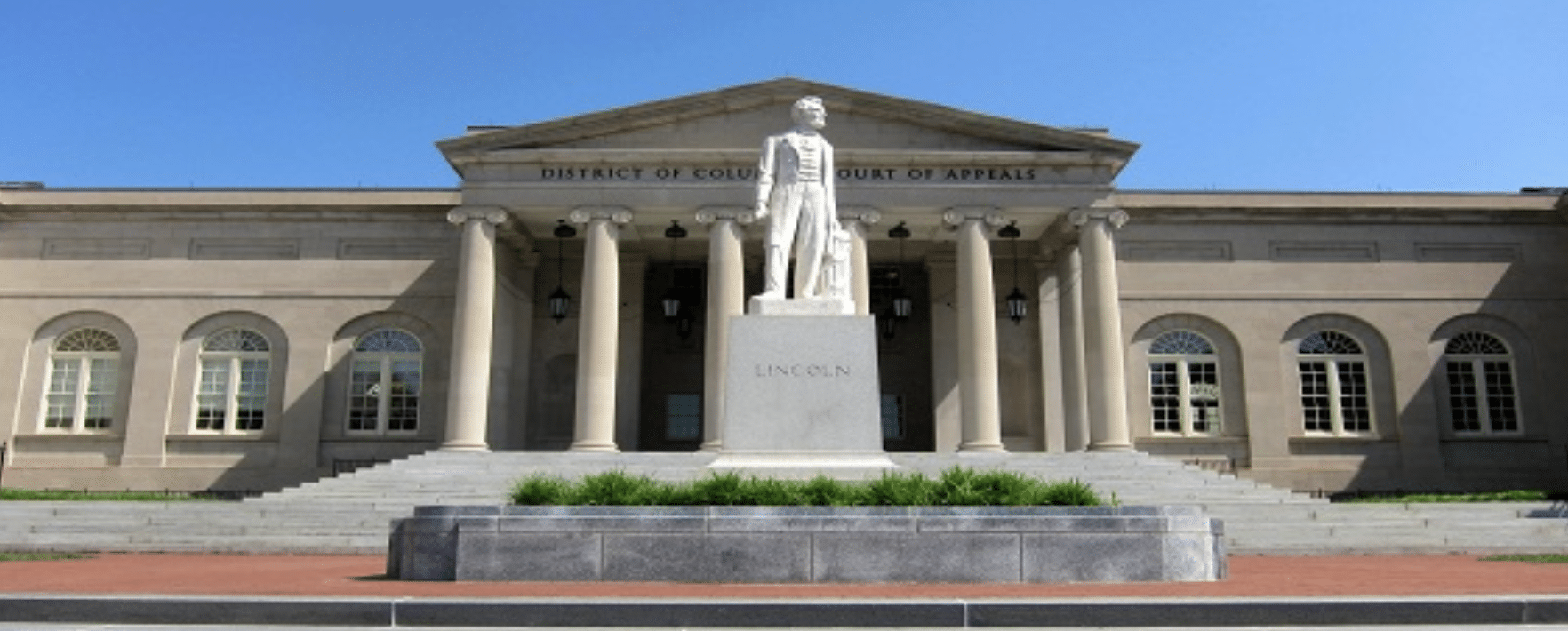
The D.C. Court of Appeals recently clarified what constitutes a “true threat” for purposes of the District’s stalking statute. In Rokhvand v. Herzfeld, 2026 D.C. App. LEXIS 302 (D.C. Aug. 27, 2026), the court held that hostile or offensive political speech does not become a true threat merely because it causes fear or distress.
What constitutes a criminal threat in D.C.?
The title of the District’s criminal threats statute identifies the conduct it prohibits: “Threats to do bodily harm.” D.C. Code § 22-407.
 The statute therefore does not generally criminalize a threat to embarrass or defame someone, damage the person’s reputation, or engage in other objectionable but lawful behavior. That limitation is consistent with the “void-for-vagueness” doctrine under the Due Process Clause, which requires criminal laws to provide fair notice of the conduct they prohibit.
When can speech constitute stalking?
The D.C. stalking statute applies to a course of conduct that includes, among other things, “threatening” or “communicating to or about another individual.” D.C. Code §§ 22-3132(8)(A), 22-3133.
In Mashaud v. Boone, 295 A.3d 1139 (D.C. 2023), the D.C. Court of Appeals emphasized that the stalking statute does not apply to constitutionally protected activity. When speech is alleged to constitute stalking, the statute covers only speech falling within the “well-defined and narrowly limited classes of speech” that the government may constitutionally regulate.
Those categories include threats, obscenity, defamation, fraud, incitement, and speech integral to criminal conduct. Mashaud, however, did not discuss in detail what qualifies as a “threat.”
That distinction matters in anti-stalking-order cases. A statement threatening to criticize someone publicly, disparage the person on social media, or try to get the person fired may be offensive and upsetting. But unless the statement constitutes some independently unlawful form of conduct—such as extortion, blackmail, or defamation—it is not necessarily a true threat and should not, standing alone, support an anti-stalking order or civil protection order.
The facts of Rokhvand v. Herzfeld
Atefeh Rokhvand and Hazami Barmada participated in continuing demonstrations outside the Israeli Embassy in Washington, D.C., protesting Israel’s military actions in Gaza. Following three encounters during which Rabbi Shmuel Herzfeld and his companions allegedly made hostile remarks, observed or photographed the protesters, and behaved in an intimidating manner, Rokhvand and Barmada sought anti-stalking orders against Herzfeld.
D.C. Superior Court Judge John McCabe denied the petitions. Although he credited the petitioners’ testimony that the encounters had frightened and distressed them, he found no threats of bodily harm, following, monitoring, or surveillance of the type covered by the stalking statute. He also concluded that Herzfeld’s comments arose in the context of a political demonstration and were protected by the First Amendment.
How did the court define a “true threat”?
The D.C. Court of Appeals affirmed the denial of the anti-stalking-order petitions. It agreed that Herzfeld’s comments, although “nasty,” were political rhetoric rather than true threats.
The court defined true threats as “serious expressions conveying that a speaker means to commit an act of unlawful violence.” Graham v. T.T., 347 A.3d 357, 365 (D.C. 2025).
Whether a statement qualifies as a true threat depends on both its language and its context. An ordinary, reasonable recipient familiar with that context must interpret the statement as a serious expression of an intent to commit unlawful violence. Political rhetoric and hyperbole—even language that is vehement, caustic, or deeply offensive—remain protected by the First Amendment.
The speaker must also possess the required subjective state of mind. Specifically, the speaker must act at least recklessly: the speaker must be aware that the recipient could regard the statement as threatening violence and deliver it anyway.
Why Herzfeld’s statements were not true threats
Herzfeld reportedly referred to the demonstrators as “wicked people” who would be “defeated” and asked why they supported the rape of innocent women. The Court of Appeals concluded that these statements were not literal threats of violence and, for the most part, were not directed specifically at Rokhvand or Barmada.
Context was critical. The remarks occurred during a contentious political demonstration addressing an issue of intense public concern. Viewed in that setting, an ordinary, reasonable recipient would understand the statements as provocative political rhetoric—not as serious expressions of an intention to commit unlawful violence.
As the court explained, the First Amendment protects debate on public issues even when it includes “vehement, caustic, and sometimes unpleasantly sharp attacks.” Because Herzfeld’s statements fell on the protected-speech side of the line between political hyperbole and true threats, they could not serve as the basis for an anti-stalking order.
The significance of Rokhvand
Rokhvand establishes an important limitation on the use of speech as the basis for an anti-stalking order in the District of Columbia. It is not enough that a statement is hostile, intimidating, or frightening to the person who hears it.
To qualify as a true threat, the statement must communicate a serious intent to commit unlawful violence; a reasonable recipient familiar with the surrounding context must understand it that way; and the speaker must be at least subjectively reckless as to its threatening character. Speech that does not satisfy those requirements remains constitutionally protected and cannot support a finding of stalking.