(202) 549-2374

Not guilty after simple assault trial
Back when I was a public defender in Philadelphia, we used to do back-to-back trials in the misdemeanor courtroom. On my best day, I had two “not guilty” verdicts, one right after the other.
This feat drew grudging praise from Stuart Schuman, our always difficult-to-please misdemeanor supervisor.
 When you were doing these back-to-back trials, you never wanted your trial to follow a “not guilty” in another case. The general feeling was that judges, being only human, would be reluctant to acquit two defendants in a row for fear that they would be accused of being unfairly biased toward the defense.
The other unwritten rule is that you never wanted to try a case when a supervisor from prosecutor’s office was in the courtroom. Just as judges were always on their best behavior when our supervisors were in the room, the fear is that they would take pity on the poor assistant district attorney whose performance was being monitored by his/her superior.
I had a win last week in courtroom 112 that proved both of these informal rules wrong.
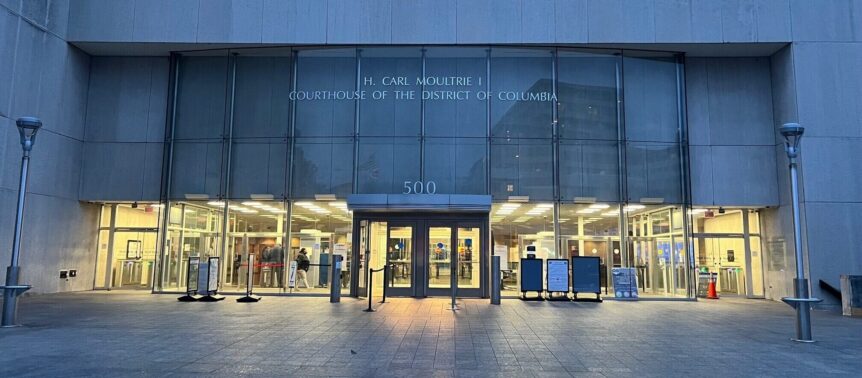
The misdemeanor courtrooms at D.C. Superior Court are very much unlike the chaos I experienced in Philadelphia. Judges take the bench on time. They know the law. And they, the courtroom clerks, and the U.S. Marshalls treat everyone in the courtroom with tremendous respect.
Similarly, it is rare that the court will entertain multiple trials on a single day. Typically, when the parties announce ready on two or more trials, the court will keep one case and “cert” the other trials out to other judges who happen to have some time free that day.
On this particular day, my simple assault case was competing for the court’s attention with an unlawful entry case that being handled by one of my colleagues.
Both of us wanted to have our case tried in front of this judge – a former public defender who is not only knowledgeable and pleasant but who is also thought to be friendly to defendants.
So we were happy when the judge agreed to hear both cases, one after the other.
My colleague’s unlawful entry case went first. The verdict came quickly: One of the AUSA noobies – no doubt a Trump hire – forgot to have his witness make an in-court identification and, when this omission was pointed out during argument, the judge refused to allow the government to re-open its case.
Not guilty!
Although happy for my colleague and his client, I was dismayed by the prospect of having to try my case next. And, sure enough, when I looked behind me, I saw that one of the prosecutor’s supervisors was now sitting quietly in the back of the courtroom to monitor the prosecutors’ performances.
I need not have worried.
The prosecutor in my case was more competent than his colleague. Even though he struggled to challenge my introduction of character evidence, this is something that befuddles many prosecutors, mostly because character evidence is so rarely introduced.
But the prosecutor could not recover from the complaining witness’ tendency to exaggerate, and the judge quickly issued a not guilty verdict in my case too.
Both prosecutors stormed out of the courtroom after the second acquittal. It is my belief that the loser in a trial should always take the initiative to congratulate the other side. (If the winner takes the initiative, it could come across as gloating.)
But these were Trump hires. And Trump people have no class. They have no manners.
Outside the courtroom in the hallway, I hugged my client, his wife and his son. There is no better feeling in the world. That is why we do this work. Then I hustled him in out of the court building.